Commercial artificial grass in Miami covers HOA common areas, sports clubs, hotel and resort landscaping, schools, retail frontage and rental properties. The build is bigger, the specification is stricter and the risk is shared with a board or an insurer. Published South Florida bands put sports and commercial material at 15 to 20 per square foot and labour at 12 to 15 per square foot, with premium landscaping turf at 10 to 15 per square foot for material and 10 to 12 for labour. Large areas and repeat work pull the installed rate down; complex detailing, wind anchoring and phasing pull it up.
What a commercial quote has to contain
- Measured drawings with the area, seams and edge detail.
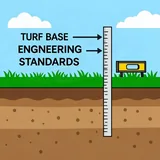
- Base specification: excavation depth, aggregate type, compacted depth and the compaction check.
- Drainage plan with the outlet, and how it ties into the site drainage.
- Wind and edge anchoring detail for a hurricane-exposed site.
- Product data with face weight, UV stabilisation, backing and the manufacturer fade warranty.
- Programme and phasing around building users.
Wind anchoring is not optional here
The Atlantic hurricane season runs June 1 to November 30 (https://www.weather.gov/mfl/, HTTP 200). A commercial surface with a large exposed perimeter, an elevated deck or a rooftop detail takes a wind load that a lawn never sees. The specification should name the perimeter fixing, the seam adhesive and the edge restraint, and the installer should be able to show the same detail on a completed local project. An insurer will ask.
Common areas and HOA boards
HOA common areas are the most common commercial job in Miami-Dade. Three things slow these projects down: unclear ownership of the landscape, a board that has to approve a visual change, and irrigation that is already mothballed. Florida law sets the frame. Chapter 720 of the Florida Statutes governs the association, and s. 373.185 bars a covenant that stops an owner installing Florida-friendly landscaping (https://www.flsenate.gov/Laws/Statutes/2023/373.185, HTTP 200), but artificial grass is not named in the statute, so boards retain appearance, colour and coverage rules. Put the product photograph, the colour and the coverage percentage in the board package and the approval moves faster.
Drainage at scale
Miami-Dade sits on oolitic limestone under a thin layer of sandy fill, and the Krome series mapped across the county drains very fast in its natural state (https://soilseries.sc.egov.usda.gov/OSD_Docs/K/Krome.html, HTTP 200). That is not the same as a graded, compacted commercial pad. On a large area the drainage design moves from "shade it away from the building" to a network of falls, channel drains and outlets tied into the site system, and in a flood zone the fill and grade change triggers floodplain review before work starts.
Cost drivers on a large area
Published South Florida bands put sports and commercial material at 15 to 20 per square foot and labour at 12 to 15 per square foot, while premium landscaping turf runs 10 to 15 per square foot for material and 10 to 12 for labour. On a large area the base is the biggest line: excavation, aggregate by the ton, compaction in lifts and disposal of the spoil. Ask for the aggregate quantity in tons rather than in square feet, and ask what happens if the crew meets rock earlier than expected, because in Miami-Dade they often do.
Frequently asked questions
What does commercial artificial grass cost in Miami?
Published South Florida bands put sports and commercial material at 15 to 20 per square foot and labour at 12 to 15 per square foot, with premium landscaping turf at 10 to 15 for material and 10 to 12 for labour. Large areas lower the installed rate; wind anchoring and phasing raise it.
Can an HOA install artificial grass in common areas?
Yes, and it is common in Miami-Dade. The board must approve the product and appearance, the coverage is usually capped, and the association should hold the drainage plan and warranty documents rather than just the invoice.
How is the surface anchored for hurricanes?
Perimeter pinning or edge restraint plus seam adhesive rated for the application, specified with the product data. Ask the installer to show the same detail on a completed local project.
Do commercial installs need permits?
Often, yes. Fences, walls, decks, patio roofs, drainage structures and grading changes can each pull the work into the permit system, and flood-zone sites get a separate review. Every dig needs a Sunshine 811 notice two full business days ahead.
Related
Sources
- InstallArtificial - artificial grass prices in Miami
- Monster Grass South Florida - cost to install turf in Miami
- Synthetic Grass Warehouse Florida - Miami artificial grass cost page
- National Weather Service Miami-South Florida - wet season and hurricane season
- USDA-NRCS Krome series - the soil mapped across Miami-Dade
- Florida Statutes s. 373.185 - Florida-friendly landscaping and association rules
- Sunshine 811 - Florida one-call notice before digging