An artificial putting green in Miami is a small area with a large specification: a shaped, compacted base, a cup liner or a synthetic cup system, a fringe or chipping collar, and a turf with a low face weight and a tight stitch so the ball rolls at a consistent speed. Published South Florida bands put putting green material at 12 to 16 per square foot and labour at 15 to 20 per square foot, the highest per-square-foot prices on this site, because the area is small, the base has to be shaped rather than flattened, and the tolerance for error is measured in millimetres.
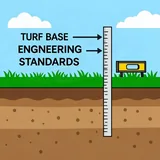
The base is the green
A lawn base can be flat. A green cannot: contours, breaks and a shaped apron are the point of it. The build compacts an open-graded aggregate in shaped lifts, checks the surface with a straight edge and a level, and only then lays the turf and cuts the cups. In Miami-Dade the rock is often shallow, so the shape is built up rather than excavated, and the same base has to carry away wet-season rain without turning the low side into a puddle.
What a green costs in Miami
- Material, 12 to 16 per square foot in the published South Florida putting green band.
- Labour, 15 to 20 per square foot, the highest labour band in the market because of shaping and cup work.
- Fringe or chipping collar priced by the running foot or square foot, and worth quoting separately.
- Base and drainage, as with any build, plus the cup system.
Most backyard greens run 200 to 600 square feet. Because fixed costs spread over a small area, the per-square-foot price is not comparable to a lawn quote, and a green that seems cheap per square foot is usually a flat pad with turf on it.
Turf choice for a Miami green
Putting turf is a short pile with a tight stitch and a low face weight, usually polypropylene or a nylon blend, and it is chosen for roll consistency rather than for looks. Infill is fine silica sand, brushed in to weight the surface and set the speed. In South Florida add ultraviolet to the checklist: everything at 8 and above on the EPA UV Index scale is very high to extreme and Miami sits there much of the year (https://www.epa.gov/sunsafety/uv-index-scale-0, HTTP 200), so a stabilised fibre is not a premium, it is the minimum.
Drainage and shade around the green
The wet season runs roughly May to October, with short heavy afternoon rain (https://www.weather.gov/mfl/, HTTP 200). A green needs a fall on the apron and a base that passes water, or the low break fills and the cups silt. Shade helps twice: it makes the surface usable in the afternoon and it slows the UV load. Where a green sits under canopy, a rinse and brush routine keeps leaf litter and mould off the putting surface.
Practice value against a driving range
A green earns its price in reps. The alternative is a drive to a practice facility, and in Miami traffic that is a real cost in time. A green with three or four hole positions, a fringe for chipping and a few metres of fairway apron covers most of what a recreational golfer practises. Ask for the cup layout and the fringe width in the quote, because those are the two things that make the green usable rather than decorative.
Frequently asked questions
What does a putting green cost in Miami?
Published South Florida bands put putting green material at 12 to 16 per square foot and labour at 15 to 20 per square foot, the highest per-square-foot bands on this site. Most backyard greens run 200 to 600 square feet.
How long does a putting green take to install?
Usually a week or two for a backyard green. The shaping and compaction of the base is the slow part, and the turf and cups go in quickly after that.
Will the green drain in Miami rain?
It will if the apron is graded and the base is open-graded with an outlet. A green built flat on compacted fill holds water at the low break, and that is where cups silt and the surface goes soft.
Can I add a chipping area or a bunker?
Yes. A fringe or chipping collar is a common add, and a synthetic bunker is a separate build. Ask for both priced as line items so you can compare offers on the same scope.
Related
Sources
- InstallArtificial - artificial grass prices in Miami
- Monster Grass South Florida - cost to install turf in Miami
- Synthetic Grass Warehouse Florida - Miami artificial grass cost page
- National Weather Service Miami-South Florida - wet season and hurricane season
- USDA-NRCS Krome series - the soil mapped across Miami-Dade
- Florida Statutes s. 373.185 - Florida-friendly landscaping and association rules
- Sunshine 811 - Florida one-call notice before digging