The Atlantic hurricane season runs June 1 to November 30 (https://www.weather.gov/mfl/, HTTP 200), which means every artificial grass installation in Miami-Dade is built inside a wind zone. The surface itself is not the vulnerable part. The perimeter, the seams and the base under both are.
What wind actually does to a lawn surface
A synthetic surface is a continuous sheet with weight in the infill, held down at the perimeter and bonded at the seams. Wind does not tear a sound installation apart from the middle outward. It works the edges first: a lifted corner lets air under the sheet, and a sheet with air under it behaves like a sail. That is why perimeter pinning and edge restraint are a specification item in this market rather than a finishing touch.
What the build has to include
- Edge restraint fixed down with adhesive, galvanised pins or rust-resistant screws, not simply tucked under planting.
- The base set below the top of the restraint so the finished surface meets the border level.
- Seam adhesive rated for outdoor use, applied to dry, clean backing, with the tufts trimmed back before bonding.
- Anchoring appropriate to the exposure, which on a coastal or Intracoastal lot is the first question to ask an installer.
Storm preparation, honestly
There is not much to do to a synthetic lawn before a storm, and that is part of its appeal. Clear loose furniture, pots and debris from the surface so nothing becomes a projectile that cuts or punctures the sheet. Check that the yard drains before the rain arrives: if a low corner ponds in an ordinary downpour, it will pond in a storm. Do not cover the surface or weight it down with sheeting, which traps water and can abrade the fibres.
What to check afterwards
Walk the perimeter first, lifting each corner lightly to see whether the restraint held. Look along the seams for a raised edge or a visible backing line. Check the low corner for standing water and for silt that has washed down into the surface, and rinse or brush it out before it is driven into the pile. Then check the base under the edges: if it has washed out, the edge will fail again in the next storm and the repair is a base repair, not a re-pin.
Repair costs after a storm
Published repair bands put minor works at a few hundred dollars: a re-pin, a re-sealed seam, a rinse and a brush. A section replacement or levelling sits at several thousand, and a full rebuild over prepared ground sits at the cost of a new installation. The severity ladder is the honest way to price storm damage, and it is why the perimeter detail matters more than the product brand.
Why the base matters as much as the anchoring
Anchor a surface properly over a base that has settled and the surface fails anyway, because the anchor has nothing solid to hold. The base is compacted in lifts to a stated density, with the aggregate open-graded so water passes rather than standing, and the edge restraint set so the finished surface meets it level. When all three hold, a storm moves nothing except debris.
That is also why a post-storm inspection starts below the surface. If the edge has washed out, the symptom is a lifted border but the cause is in the stone, and a contractor who simply re-pins the edge has fixed the photograph rather than the problem.
The insurance question
On a commercial or HOA installation the surface becomes part of the property record, and an insurer or a property manager may ask how it is anchored. The answer is a specification detail: the perimeter fixing, the seam adhesive and the edge restraint, named in the quote and shown on a completed local project. On a residential yard the same detail protects you against the argument after a storm about whether the damage was wind, installation or both.
Keep the documents. A photograph of the base before the surface was laid, the product data sheet and the installation date answer most of those questions faster than an inspection.
Frequently asked questions
Will a hurricane rip up artificial grass?
A properly anchored surface resists wind far better than a natural lawn, and it is the perimeter that fails first when anchoring is missing. Loose debris is the more common cause of damage than wind alone.
Does the surface need to be taken up before a storm?
No. Clear loose objects from the surface and check the drainage. Removing or covering the sheet is not recommended.
Is storm damage covered by warranty?
Material warranties exclude storm and force majeure damage. The workmanship warranty may cover a seam or edge that failed, which is why the two are written separately.
Should I replace a section that lifted in a storm?
Only after the base under it is checked. A section that lifted because the restraint failed can be re-pinned and re-seamed; one that lifted because the base washed out needs the base repaired first.
Does a hurricane warranty exist on turf?
Material warranties commonly exclude storm damage, so no. What exists is a workmanship warranty on the anchoring and the seams, and it is the term worth negotiating.
Sources
- National Weather Service Miami-South Florida - wet season and hurricane season
- Florida Statutes s. 373.185 - Florida-friendly landscaping and association rules
- Sunshine 811 - Florida one-call notice before digging
- InstallArtificial - artificial grass prices in Miami
- Monster Grass South Florida - cost to install turf in Miami
- Synthetic Grass Warehouse Florida - Miami artificial grass cost page
Related
Artificial Grass services in Miami
Miami Artificial Grass Residential Grass
A residential artificial grass installation in Miami is a drainage and sub-base project that happens to end with grass on top. The lawn is the last two days of the job; the base is everything else.

Miami Artificial Grass Pet Grass
A pet yard is a plumbing problem with grass on top. Two dogs in a Miami wet season produce far more urine than a thin base can carry away, and the smell people blame on the grass is ammonia from a base that holds water.
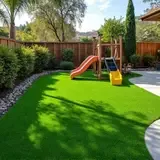
Miami Artificial Grass Playground Grass
A playground surface is specified by what happens when a child falls on it. The grass is the top layer of a safety system, and the layer under it, the shock pad, is the part a cheap quote leaves out.
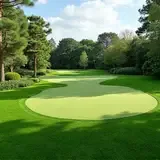
Miami Artificial Grass Putting Greens
A putting green is the most precisely built surface in this trade. The ball tells the truth about the base, and a green laid over an uneven pad will not roll true no matter what the turf costs.
Miami Artificial Grass Commercial Grass
Commercial work is judged on documents as much as on the surface. A property manager needs a specification, a drainage plan, a wind detail and a warranty schedule that survives an insurance review, not a square-foot price.
Areas we serve
Miami
Artificial Grass in Miami, FL - costs, water and soil notes.
Miami Beach
Artificial Grass in Miami Beach, FL - costs, water and soil notes.
Coral Gables
Artificial Grass in Coral Gables, FL - costs, water and soil notes.
Kendall
Artificial Grass in Kendall, FL - costs, water and soil notes.
Hialeah
Artificial Grass in Hialeah, FL - costs, water and soil notes.
Doral
Artificial Grass in Doral, FL - costs, water and soil notes.
Aventura
Artificial Grass in Aventura, FL - costs, water and soil notes.